

A Honey Jar in the Winter Pantry, and Fourteen Steps to the Grange Hall
A retired mail carrier who climbed other people's porch steps for thirty years counts his own stops, beside a neighbor's bottle of herbs in raw honey. The label, the honest research and the seller's fine print, read line by line.

First, the people: Eldon Pratt is a pen name. Nell, Becca and the Thursday folding crew at the Grange are composites, the way small-town newsletters have always been written.
Everything about the syrup itself, its label, its price, its directions, its reviews and its fine print comes from the seller's own pages, read in October 2026.
 Pantry Pick
On the first hard frost of November, I stood at the bottom of the Grange hall steps with a bundle of newsletters under my arm and counted.
Fourteen steps, painted gray, with a landing after the eighth. I have climbed them every Thursday since 1979, and that morning I stopped on the landing to let my chest catch up with my legs.
Nobody saw me do it. Gil Lafleur was already inside setting up the folding table, and the parking lot was empty except for my truck and a crow.
But I knew. Thirty years of carrying other people's mail up other people's porches, and I had just stopped on a landing I used to take two at a time.
I'm sixty-seven. I carried Rural Route 4 out of the East Alder post office from 1986 until the spring I retired, and I've typed this little newsletter on my late wife's typewriter ever since.
So this is a column about stairs. It's about a tight chest in the morning, and a cough I carried for twenty-two years after I quit the cigarettes that gave it to me.
It's also about my neighbor Nell, a jar she keeps in her winter pantry between the maple syrup and the canning lids, and what my stair count said after twelve weeks of keeping it in pencil.
If you've ever stopped on a landing and pretended to tie your boot, you'll know most of this already. You just haven't seen anybody type it up on kraft paper and pin it to the general store corkboard.
Thirty Years of Other People's Porch Steps
People think a rural carrier sits in a truck all day. Some days you do.
Then you hit the stretch of Route 4 where the boxes give way to porches, and the porches give way to packages, and the packages come with steps.
I counted them once, the winter of 1994, because the postmaster bet me a coffee I couldn't. On an ordinary Tuesday, Route 4 had eleven hundred and some steps between the first box and the last.
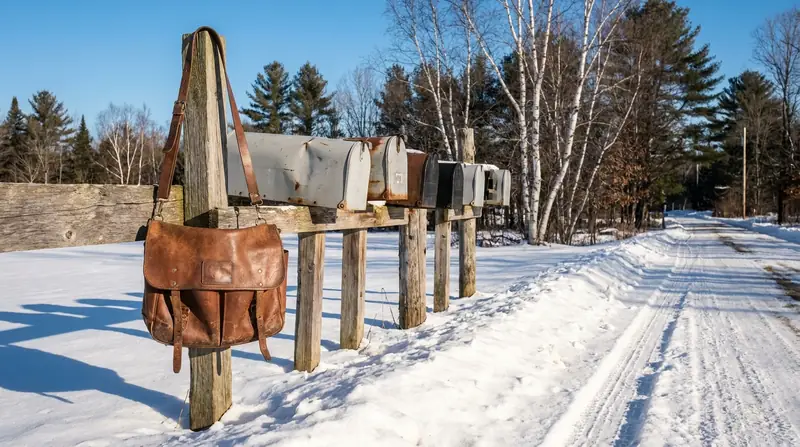
I got the coffee. I also got a lesson I didn't know I was learning, which is that a man's chest keeps its own ledger, and it doesn't care whether he's paying attention.
In my twenties I took the Tremblay porch, all nineteen steps of it, without noticing it was there. In my forties I noticed it in January.
In my fifties I started parking closer to the porches. I told the postmaster it was for the packages, and he was kind enough to pretend he believed me.
Here is the part I'm not proud of. I smoked from the age of seventeen until the March my daughter Becca was born, which was 1977, and I'm told that counts as a long time.
I quit cold, the way men of my generation quit things. Threw the pack in the woodstove, chewed through a lot of toothpicks, and never bought another.
The cough didn't quit with me. It hung around like a dog that followed me home, a rattle first thing in the morning that cleared after my coffee and came back when the air went cold and dry.
Jeanette, my wife, called it "the weather report." She'd hear it from the kitchen at six in the morning and say, "Sounds like a cold one today, Eldon," and she was almost always right.
I carried that weather report for twenty-two years after the last cigarette. It faded slowly, the way a stain fades out of a barn board, and by my fifties it only came back in the deep of winter.
I tell you all this so you understand that I am not a man who expects a jar to undo forty years. I'm a man who counts steps, and I wanted to know whether I could get the landing back.
How a Mailman's Newsletter Got Its Name
When I retired, Jeanette told me I'd go stir-crazy inside a month. She was right in three weeks.
So I dragged her mother's old Smith-Corona out of the attic, the forest-green one with the sticky "e," bought a ream of kraft paper at the feed store, and started typing up what I knew about the town.

Who's selling firewood and for how much. Which road the town grader did last.
Whose dog is loose and whose dog is a liar about being loose.
And at the top, every single issue, a little box I called The Chest Forecast. It started as a joke about Jeanette's "weather report" and turned into the most read thing on the page.
It's simple. Each morning I look at the thermometer on the porch, check the wind, sniff the air for wood smoke, and type one line: "Cold and dry, smoke settling in the valley, take the long scarf."
I tack that line on the corkboard at Lafleur's General Store before seven, which is why it's called Clear Breath Daily even though the full sheet only goes out Thursdays.
You would be surprised how many people in a town of nine hundred read a weather report about air. Half of East Alder is over sixty, and half of that half spent their working lives in barns, mills, woodshops and truck cabs.
We all know what a cold, still morning does to a chest. The smoke from three hundred woodstoves settles in the valley like milk in coffee, and you feel it on the first breath out the door.
The forecast line doesn't change the air. It just tells a man to take the long scarf, walk the flat road instead of the hill, and not be a hero on the Grange steps.
Gil's brother saves them. He has a coffee can full of my forecast lines going back nine years, and he swears he can tell a hard winter from an easy one by how many times I typed "long scarf."
Jeanette passed in the winter of 2021. I kept typing.
Some weeks the newsletter was the only reason I put my boots on.
Fourteen Steps and a Landing
The Grange hall sits on a rise at the north end of the common, white clapboard with green shutters, and the front steps were built by men who thought everyone would be twenty-five forever.
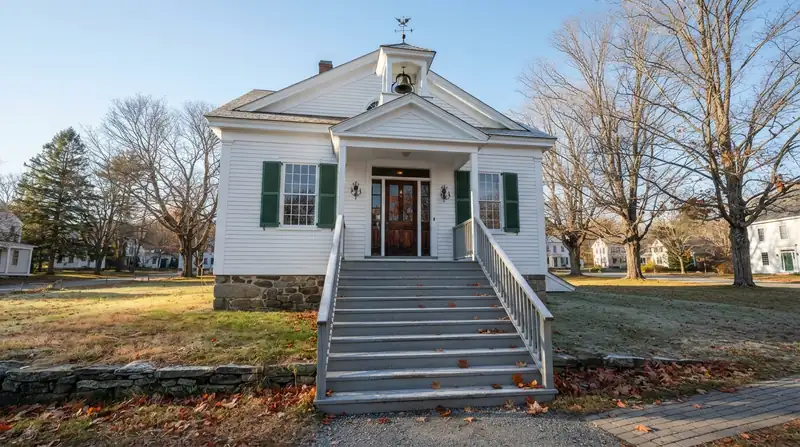
Every Thursday at eight, four of us fold the newsletter on the long table inside: me, Gil, Nell Corriveau from next door, and whichever of the Hadley sisters is speaking to the other that week.
I carry the bundle up. It's not heavy, maybe nine pounds of kraft paper, less than a single day's catalogs on Route 4 in December.
For forty years those fourteen steps were nothing. Then, a little at a time, they got longer.
I want to be exact about this, because I'm a mailman and mailmen are exact about counts. In the winter of 2019 I stopped zero times; in the winter of 2023, I stopped once, on the landing, on the coldest mornings.
Last winter I stopped on the landing every Thursday from Thanksgiving to the sugaring season. Twice in February I stopped again at the eleventh step, with my hand on the rail, pretending to look at the bell tower.
The stops weren't long. Ten breaths, maybe fifteen.
The chest felt tight the way a wool sweater feels tight when it's come out of the dryer, and the cough came along for the ride.
I didn't tell anybody. I did what I do with every number that worries me: I wrote it down.
In the back of the newsletter ledger, the one where I keep track of who paid for classified lines, I ruled a column. Date, temperature, stops on the Grange steps, and a word or two about the morning cough.
By the end of last winter that column had a shape, and the shape went the wrong direction.
What the Stethoscope Heard
In April I went for my yearly visit at the clinic in town. The PA there is a young woman named Dana who has the patience of a saint and the handwriting of a seismograph.
She did the usual things. Weighed me, wrapped the cuff, asked about the woodpile and whether I was still eating Nell's pie, which I was.
Then she warmed the stethoscope in her hand, which I appreciated, and had me breathe in and out while she moved it around my back like she was looking for a dropped earring.
She listened longer than I liked. I counted the breaths, because I count everything, and it was nineteen.
"You sound like a man who quit smoking a long time ago and still splits his own wood," Dana said finally. "Which is what you are."
I told her about the steps. I showed her the column in the ledger, which made her laugh, and then made her quiet.
"This is a good column," she said, "so keep it, and bring it back next year."
She asked about my winters, my wood smoke, my morning cough. She talked about walking every day, even in the cold, with a scarf over my mouth on the bitter mornings, and about coming back sooner if anything changed.
She did not hand me anything. She said the most useful thing she could do for my chest was get me walking on flat ground every single day, and the most useful thing I could do was keep counting.
I left with an appointment card for next April and a sentence I typed at the top of my ledger column that night: "Walk every day, keep the count, come back if it changes."
That's the plan. Everything else in this column, the jar included, rides along beside it.
Nell's Winter Pantry
Nell Corriveau has lived in the yellow farmhouse next to mine since 1983. She cooked in the East Alder school cafeteria for thirty-one years, which means she fed half the town lunch at one point or another, including my daughter.
She is seventy, five-foot-nothing, and the only person in town who calls me "Mister Pratt" when she's annoyed with me, which is often.
Nell keeps a winter pantry the way some men keep a woodshed. Shelves of canning jars, two gallons of maple syrup from the Blanchard sugarhouse, a crock of dried apples, and on the second shelf, right at eye level, a short row of amber bottles.
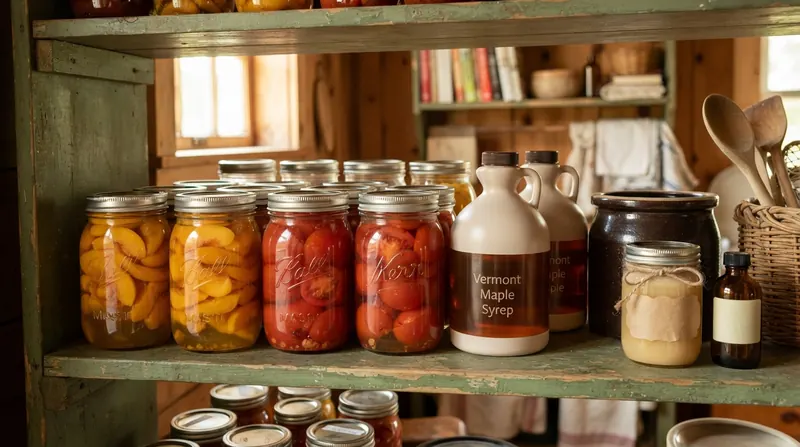
She came over on a Thursday in early November, two days after my landing stop, carrying a pie plate covered with a dish towel and a paper sack.
"Gil says you stopped on the steps," she said, setting the pie on my counter.
"Gil talks too much," I said.
"Gil talks exactly enough," she said, "and so do I." Then she took a small amber bottle out of the sack and set it on the windowsill above my sink, where the sun hit it and turned it the color of maple syrup.
I asked her what it was. She said it was what she keeps on the second shelf of her winter pantry every year from the first frost to mud season, and had for the better part of a decade.
"It's herbs in raw honey and lemon, a spoonful in the morning before you go out in the cold," she said. "That's all it is, Eldon, and it won't make you thirty again."
I laughed at that, because it was exactly the sentence I would have typed.
The bottle was from a company called Urban Moonshine, out of Burlington. Nell said she first bought it at the farmers' market up there, years ago, from a booth with a line of people at it.
I made the face anybody my age makes at the word "moonshine." Nell rolled her eyes.
"It's the alcohol," she said. "They make herbal extracts the old way, in alcohol, like bitters.
Read the label before you make any more faces."
I read that tag three times while the coffee went cold. Then I did what any old mailman does with an unfamiliar package: I put it on the shelf and decided to read the label before I opened it.
A Burlington Kitchen, a Market Booth and a Word My Grandfather Would Have Liked
The word on the label bothered me for two days, so I looked the company up the way I'd look up a forwarding address. Urban Moonshine started in 2008 in a kitchen in Burlington, Vermont, with a booth at the farmers' market there.
Its own page says it grew from that booth into a brand you can find across the country. It also says it's female-founded, and that a team of herbalists formulates the line.
I can't tell you who picked the name or why, because the part of their page I read doesn't say. What I can tell you is what the word means to an old Vermonter, which is something made at home, in small batches, in alcohol, by people who knew their plants.
My grandfather made a cherry bounce every August in a crock in the root cellar. He'd have liked a company that wasn't shy about the alcohol and printed the percentage right on the bottle.
The other thing the company is known for, Nell tells me, is bitters, the little bottles of bitter herbs in alcohol that old-timers took before a heavy supper. I haven't tried them and I'm not writing about them; I mention them only because it explains the shelf this syrup comes from.
Herbal extracts made in alcohol are about as old as the hills around East Alder. The alcohol draws the plant material out of a root in a way water can't, and it keeps the bottle from spoiling on a pantry shelf through a whole winter.
None of that tells you whether the syrup does anything for anybody's chest. It tells you the company is a real company, in a real Vermont city, making things the way people here made them before there were store aisles full of everything.
That's the kind of fact a mailman likes. A real return address, a real phone number, and a label with a percentage on it.
Did you read the label, or is it still on the windowsill looking pretty?
6:48On the windowsill. I'm reading it tonight with the good glasses.
6:52Good. Measuring spoon, not the soup spoon, and put a slice of that pie in you.
6:53Already had two. Folding is Thursday at eight, I'll carry the bundle.
6:55That night, after supper, I sat at the kitchen table under the hanging lamp with my reading glasses, a magnifier from the post office, and the bottle. I read every word on it, front, side and back, the way I used to read a smudged address in the rain.
Reading the Bottle Like an Address in the Rain
A mail carrier learns one thing early: the address is the address. It doesn't matter what you think the house number should be, or what the old-timers call the road.
You read what's written.
So here is what's written on the bottle, and on the seller's own page, in the order it's printed. I've left nothing out and added nothing.
Water and cane alcohol come first. That's the base, the way it is in any herbal extract made the old way.
The alcohol pulls the plant material out of the roots and leaves, and the label is plain about how much: thirty-five to forty percent.
That's about the strength of a bottle of whiskey. I'll come back to that, because it matters, and I did the arithmetic so you don't have to.
Elecampane root is third. I'd never heard of it.
It turns out to be a tall yellow-flowered plant, a cousin of the sunflower, that grew in old European cottage gardens and still grows wild along some Vermont roadsides.
Raw honey is fourth, and thyme leaf is fifth. Honey I know; my grandfather kept bees behind the barn.
Thyme I know from Jeanette's chicken soup.
Then licorice root, elderflower, lobelia, and lemon peel. Four more plants, and the lemon is mostly why the whole thing smells like a lemon drop that fell in a pine forest.
What isn't on the label is just as important. There are no milligrams printed for any single herb.
It's a blend, and the seller doesn't say how much of each is in a spoonful.
I don't hold that against them, exactly. Plenty of honest kitchen recipes don't list grams.
But it does mean that when somebody tells you a study found such-and-such about thyme, you can't line that study up against this bottle and say it's the same dose.

What the Research Actually Says, Plant by Plant
Before I let anything near my morning coffee, I went down to the East Alder library on a Tuesday and asked Marjorie at the desk to help me look up each plant. She set me up on the computer in the corner and printed what we found.

I'm going to give it to you the way I'd give you a registered letter: signed for, everything out in the open. Some of it is encouraging.
Some of it is "we don't know." None of it says this bottle changes anybody's chest, and I won't pretend it does.
Thyme first, because it has the longest paper trail. In Europe, thyme has a long history of traditional use for the chest and the airways. Germany's Commission E, the government panel that reviewed herbs decades ago, approved thyme for symptoms of bronchitis and whooping cough. [1]
The European Medicines Agency lists thyme liquid extract as a traditional herbal medicinal product for coughs and colds. That's a real listing from a real agency, and it's more than most kitchen herbs can claim. [1]
But here's the honest half. A review of thyme notes that the direct clinical evidence in people is limited to a few small trials, mostly of syrups that combined thyme with primrose. Traditional use, a European listing, and a short stack of small studies: that's the thyme file. [1]
Elecampane next, and this one is mostly tradition. The herbal references describe its long history in folk practice for the chest and for coughs, and they credit its character to inulin and volatile oils in the root. [2]
And then they say the part I respect. In the sources Marjorie and I read, there were no modern clinical trials in people. The elecampane file is a tradition file, not a study file, and I'm going to call it that. [2]
Licorice Root, Read Twice
Licorice root is sixth on the label, and it gets its own section, because it's the one plant on this bottle with a caution printed on a federal fact sheet.
Licorice has a long history in traditional herbalism for soothing the throat and the airways. The National Center for Complementary and Integrative Health, the federal office that writes plain-language sheets on these plants, says the main active compound is called glycyrrhizin. [3]
And then it says something every man my age should read twice. Long-term use or large amounts of licorice can raise the numbers on the cuff and lower your potassium, and people with heart or kidney trouble, or high cuff numbers, shouldn't use licorice-containing products without talking to a professional first. [3]
I take something every morning for my cuff numbers, which Dana started me on three years ago. So before I opened the bottle, I called the pharmacy in town and asked.
Morning, Marisol. Quick question about licorice root in an herbal syrup, alongside what I take for my cuff numbers.
9:02Good question to ask. Bring me the bottle when you pick up on Friday and I'll look at the whole label with you.
9:10Will do. It's the amber one with the green label, Nell's.
9:11Ha, everybody's bottle in East Alder is Nell's. See you Friday, and check in with Dana too.
9:13Marisol looked at the label on Friday with her glasses on her nose. She told me what the fact sheet says, which is what I just told you, and said the amount in a spoonful isn't printed, so the label dose is the ceiling and Dana gets the last word.
I called Dana's office. The answer came back through the front desk: go ahead with the label dose, don't stack it on top of licorice candy or licorice tea, and mention it at the next cuff check.
That's my answer, for my chest and my morning routine. Yours belongs to your own clinician.
Elderflower is seventh, and here I caught myself making a mistake. I found a federal fact sheet on elderberry and nearly typed it into this column.
Then I read it again. The fact sheet is about the berry, the dark purple fruit, and it says the evidence for its effects is limited and that there is "insufficient evidence to know" whether it helps with symptoms. [4]
The label on Nell's bottle says elderflower: the creamy white blossom, not the berry. Different part of the plant, different file.
So I'm telling you the berry sheet exists, and that it isn't about this bottle.
Lobelia leaf and seed is eighth. It's a small blue-flowered plant that herbalists use sparingly, in small amounts, and it shows up in old formulas for the chest.
The label doesn't print an amount for it, and I didn't find a federal fact sheet on it to quote. So I'll say only what's true: it's on the label, in a blend, and the printed dose is the dose.
If lobelia gives you pause, that's a reasonable pause, and the place to take it is your clinician's office.
Lemon peel is last. It's lemon peel.
Nobody needs a library for that.
A Spoonful Is Not a Swallow
Now back to the alcohol, because Nell was right to put it on the pie tag, and because I'd want somebody to tell me straight.
The label says 35 to 40 percent alcohol, and the suggested serving is 7.5 milliliters, which is one and a half teaspoons. I sat at the kitchen table with a pencil and did the arithmetic.
Seven and a half milliliters times 35 percent is about 2.6 milliliters of pure alcohol. Times 40 percent, it's 3.0.
Call it a bit under three milliliters in one measured spoonful.
The federal definition of one standard drink in this country is 0.6 fluid ounces of pure alcohol, which is about 17.7 milliliters. That's a twelve-ounce beer, a five-ounce glass of wine, or a shot of whiskey.
So one spoonful is roughly a sixth of a standard drink. That's small, but it isn't nothing, and four spoonfuls a day, the most the label allows, adds up to about two-thirds of a drink.
For me that settled a few rules before I ever opened the cap. One spoonful in the morning, after breakfast, before my walk, and never before I drive the truck.
Not in place of anything Dana tells me to do. Not if I've had a beer with supper, and not if I ever find myself reaching for the bottle like it's the bottle on the top shelf at Gil's brother's camp.
If you don't drink alcohol at all, for your faith, your history or your liver, this is not your bottle, and there's no shame in that. Read the label and walk past it.
And the label is plain about one more thing: not to be used during pregnancy. That doesn't apply to an old mailman, but it applies to a lot of the daughters and granddaughters who read this sheet, so I'm typing it here.
How I Take It, and What It Isn't
I opened the bottle on the second Monday of November, a morning the porch thermometer read nineteen degrees and the Chest Forecast line said: "Cold, still, smoke lying low on the river. Long scarf.
Flat road."
Step one: breakfast first. Oatmeal with a spoon of Nell's dried apples, two cups of coffee, the radio on the farm report.
The alcohol sits better on something than on nothing, and Nell said so on the tag.
Step two: the measuring spoon. Not the soup spoon, not a swig from the cap.
I keep Jeanette's old tin measuring spoons on a ring by the stove, and the one-and-a-half teaspoon is right there between the one and the tablespoon.

Step three: take it slow. I let it sit on my tongue a moment before I swallow, the way Nell said to, and I don't chase it with water right away.
Step four: boots, scarf, door. Then the walk Dana asked for, out the driveway to my mailbox and down the flat stretch of the River Road to the Blanchard sugarhouse and back.
One point four miles, I clocked it with the truck.
That's it. The whole thing takes less time than it takes the coffee to cool, and it fits in front of the one thing that actually matters, which is the walk.
The taste, since everybody asks. It's honey and lemon first, sweet and bright, then the roots come through, earthy and a little bitter, and then the alcohol warms the back of your throat like a cold morning and a woodstove arguing.
Nell says it tastes like "a lemon drop that went to church in a pine forest." Gil says it tastes like his grandmother's cellar.
I say it tastes like something made by people who weren't trying to hide what's in it.
Now, what it isn't, because I spent a career delivering packages that weren't what the label said, and I won't do that to you.
- It is a measured spoonful of five herbs in raw honey and lemon, with cane alcohol as the base
- It is something to take before a cold-morning walk, not instead of one
- It is a short ingredient line you can read with a magnifier and look up at the library
- It is up to four servings a day by the label, and one a day is what I settled on
And it isn't:
- It isn't something you swallow with a glass of water; it's a liquid you measure with a spoon
- It isn't an inhaler, and it isn't a substitute for anything your clinician has given you for your chest
- It isn't a swig from the bottle; 7.5 mL is the serving, and the label sets the ceiling
- It isn't for the truck: there's alcohol in it, so it goes after breakfast and before the walk
- It isn't for pregnancy, by the label's own words
How long does a bottle last? That depends on how many spoonfuls you take, and the label allows anywhere from one to four a day.
I did the arithmetic for both ends.
At my one spoonful a day, the small bottle lasts a bit over two weeks and the big one about a month. At the label's maximum of four a day, the small bottle is gone in four days.
That's worth knowing before you order.

I want to be very plain about the walk, because it's the part of this story with a clinician behind it. Dana didn't say "take a spoonful"; she said "walk every day."
The spoonful is my morning habit; the walk is the plan.
On the coldest mornings I wear the long scarf over my mouth and nose, the way Dana suggested, so the first breaths out the door come through wool instead of straight off the river.

I walk the flat River Road instead of the Ridge Road. I go slower in December than I do in May, and I don't apologize to anybody, including the Blanchard dog.
What the People Who Bought It Wrote
Before I bought a second bottle of my own, I did what I'd tell anybody to do: I went to the seller's page and read what other buyers wrote.
The page shows an average of 4.93 stars from 146 reviews. That's a lot of reviews for a small Vermont company, and a high average, and I'll tell you what I think a high average is worth in a minute.
Most of the reviews are short. Very short, some of them.
Here are three, quoted exactly as they appear, spelling and all, with portraits our art desk added so you can picture a face.

Awsome product

Works great!

I will definitely be a repeat customer.
I know what you're thinking, because I thought it too. Two words and a misspelling is not exactly a lab report.
But I spent thirty years reading what people write when they don't have to write anything. Postcards, notes taped to mailboxes, "leave it on the porch, the dog is friendly" in a child's handwriting.
Short notes are honest notes, usually. Ernest didn't write an essay because he didn't need to; he liked it and moved on with his day.
That's how most people in East Alder talk about anything that works the way they expected.
H. H. is the one I'd underline.
"Repeat customer" is the strongest thing a buyer can say, because it's a promise about their own wallet, not about the product.
Here's what I won't do. I won't take 4.93 stars and tell you it means the syrup will do anything in particular for your chest.
Stars measure how happy people were with what they bought. They don't measure what happened inside anybody.
And I'll tell you something else I noticed. Some of the reviews on that page use words about colds and coughs that I'm not going to print as if they were promises, because they're one person's experience and this newsletter isn't in the promising business.
If you want to read them yourself, they're on the seller's page, all 146. Read the short ones and the long ones, and decide like a grown-up.
Dad, Nell sent me a picture of the Grange steps with a pencil tally on a sticky note. Are you counting your breaths now?
4:31Counting stops, zero this week. Dana said keep the count.
4:40Good. Are you actually walking or just typing about walking?
4:41River Road to the sugarhouse and back, every morning. Long scarf, your mother's spoons.
4:44OK that made me cry a little. Call me Thursday after folding.
4:45Twelve Weeks of Stops, in Pencil
Here is the column, the way I kept it in the back of the newsletter ledger, cleaned up a little so you can read my handwriting. It counts stops on the Grange steps on Thursday mornings, plus the walk, plus a word about the morning cough.
It doesn't count anything Dana measures. I'm not qualified to measure what Dana measures, and neither is a jar.
Eldon's stair count, November to February
- Week 1Spoonful after breakfast five mornings of seven. Walked the River Road four times. Grange steps: stopped on the landing. Morning cough: same old weather report.
- Week 2Nothing. Same landing stop, same morning rattle, nineteen degrees and smoke on the river. Wrote "nothing" in the column and nearly gave the bottle back to Nell.
- Week 3Walked every day for the first time since Jeanette. Grange steps: landing stop, short. Margin note: "the walk is the hard part, the spoon is the easy part."
- Week 4Thanksgiving at Becca's in Albany. No walks for four days, too much pie, landing stop and a second stop at step eleven. Wrote it down plainly.
- Week 6Grange steps: no stop. First time since the winter of 2022. Didn't tell anybody, then told everybody at folding.
- Week 9Cold snap, minus eight, wood smoke thick in the valley. Stopped on the landing again. Took the long scarf and the flat road all week.
- Week 12Grange steps: no stop, three Thursdays out of four. Booked a visit with Dana to show her the column.
I want to slow down on week two, because it's the week most people quit anything. Seven mornings in a row of nineteen degrees, the same rattle at six a.m., and a pencil line that said "nothing."
I nearly carried the bottle back across the yard to Nell. Instead I asked myself what I'd have told a new carrier who quit Route 4 after a week because the porches were still long.
You don't judge a route by the first week. You judge it by February.
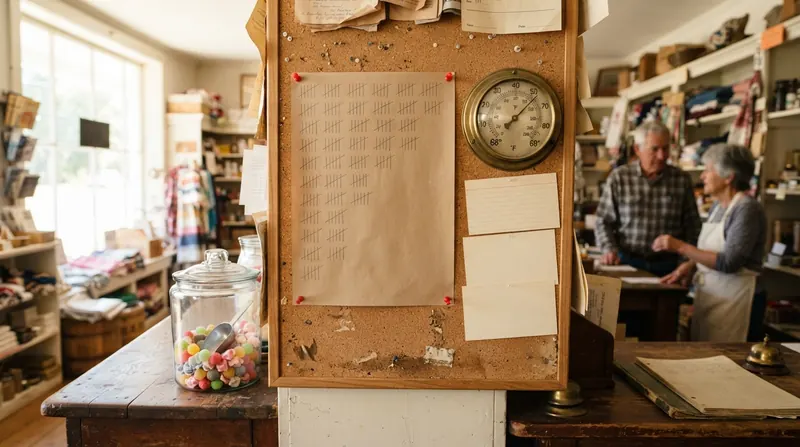
Week three is the week I'm proudest of, and it has nothing to do with the bottle. I walked seven days out of seven for the first time since the winter Jeanette passed.
I'm going to be honest about why. The spoonful gave me a reason to stand at the counter in my boots.
Once I was standing at the counter in my boots, the door was right there.
That's not a property of elecampane root. That's a property of habits.
A small thing you do every morning in the same spot is a handle, and a man can pull himself through a door by a handle.
Week four was Thanksgiving, and I'm including it because a column that only shows the good weeks is an advertisement, not a ledger. Four days without a walk, pie at every meal, and the Grange steps the next Thursday were long again.
Week six was the morning I took all fourteen steps without stopping. I'd love to tell you it was the syrup.
I honestly can't separate the syrup from five weeks of walking, a long scarf and a milder Thursday, and neither can you.
Then week nine, the cold snap, put me right back on the landing. Minus eight on the porch thermometer, smoke so thick in the valley the Chest Forecast line just said "Stay in if you can."
I keep a second little tally under the stair count, for the morning cough. It's not science; it's a mark for each morning the old weather report woke me before the alarm.
In November there were nineteen marks. In the cold-snap week of January there were six in seven days, which is about what last winter looked like all the way through.
By February there were nine marks for the whole month. I'm printing those numbers because they're mine, not because they mean anything about you, and not because I know what moved them.
A milder February, more walking, a scarf over the mouth and a spoonful by the door all happened at the same time. Anybody who tells you which one did the work is guessing, and I've been a mailman too long to deliver a guess as a fact.
I didn't stay in, because I'm stubborn. But I walked the flat road with the scarf up and stopped on the landing again that Thursday, and I wrote it down, and I didn't throw the ledger across the room.
By week twelve, three Thursdays out of four, no stop. The morning cough was still there on the coldest days, the old weather report, quieter than last winter but not gone.
I'm not going to tell you it's gone, because it isn't.
I took the column to Dana in February. She read it the way Marisol reads a label, glasses on her nose.
"You walked," she said. "Every day.
Look at this." She tapped the walk column, not the spoon column.
"The walking is what I can vouch for," she said. "Keep doing what you're doing, keep the scarf, keep counting, and I'll see you in April."
Nell wrote that after she counted. I hadn't counted; Nell counts everything, including how many pieces of pie a man has eaten in her presence since 1983.
And notice the order she put it in. The spoon comes first only because it's on the counter by the door; the walk and Dana are the parts that carry the weight.
Folding Day at the Grange, the Way It Goes Now
Here's a Thursday in March, start to finish, so you can see how small the bottle is in the middle of a whole morning.
Five-forty: awake before the alarm, the way thirty years of a seven o'clock route will do to a man. The old weather report in my chest, softer than it used to be on a twenty-degree morning.
Six-ten: porch thermometer, wind, a sniff for wood smoke. I type the Chest Forecast line on the Smith-Corona: "Twenty-two and clearing, smoke lifting by nine, short scarf will do."
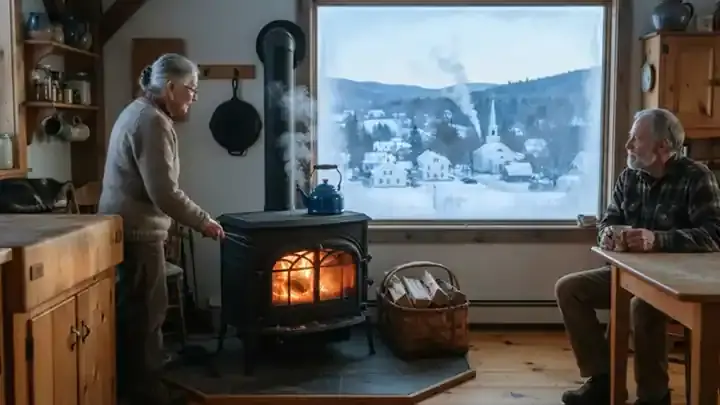
Six-forty: oatmeal, coffee, farm report. Then Jeanette's measuring spoon, one and a half teaspoons, honey and lemon and roots, and the warm line down the back of the throat.
Six-fifty: boots, scarf, the River Road to the sugarhouse and back. The Blanchard dog walks the last quarter mile with me now, which I count as a social life.
Seven-forty: I tack the forecast on Lafleur's corkboard. Gil's brother reads it out loud to whoever is buying coffee, which is how the "short scarf will do" line made it to the town clerk.
Eight o'clock: the Grange steps. Fourteen of them, the landing after eight, the bell cupola overhead.
I carry the bundle up.
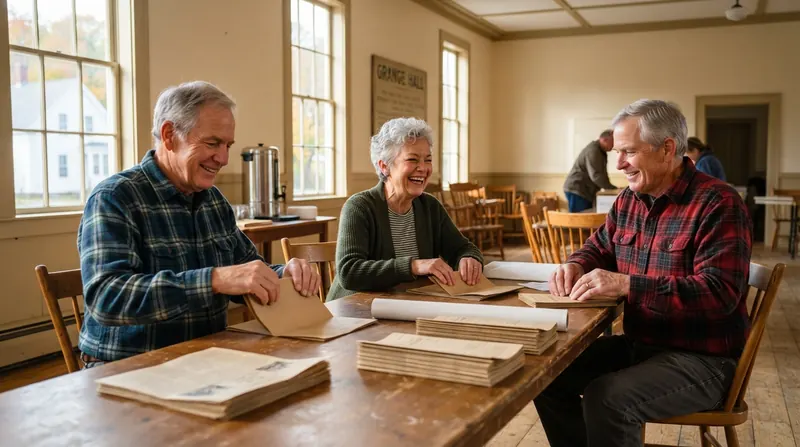
That Thursday in March I didn't stop. I'd love to say I noticed, but the truth is Gil noticed, because he was standing at the top holding the door and he said, "Well, look who's twenty-five again."
I'm not twenty-five again. I'm sixty-seven, and some Thursdays I still stop on the landing, especially when the smoke is low and the cold is the still kind.
But I know my count now. I know which mornings are landing mornings and which ones aren't, and I know the walk column is what moves the stair column, more than anything I can buy.
And I know that a small amber bottle on a windowsill turned out to be a handle on the morning. That's worth something to a man who lives alone with a typewriter.
What the Sheet's Readers Wrote Back
When I typed up the first version of this story for the Thursday sheet, I got more letters than the year I printed the Hadley sisters' dueling pie recipes. Here are some of them, shared with permission and trimmed for space.
Ron's letter is the one I'd pin to the top of the corkboard if I could. Taking the walking part and leaving the bottle is a perfectly good way to read this column.
The walk costs nobody in town a cent; the bottle costs money and has alcohol in it. If you take only one thing from Clear Breath Daily this winter, take the River Road.
Two Neighbors, One Bottle and a Pencil Count
In February the public-access radio fellow from the high school asked if he could record Nell and me on her porch for the town's little audio program. We said yes on the condition he bring his own coffee.
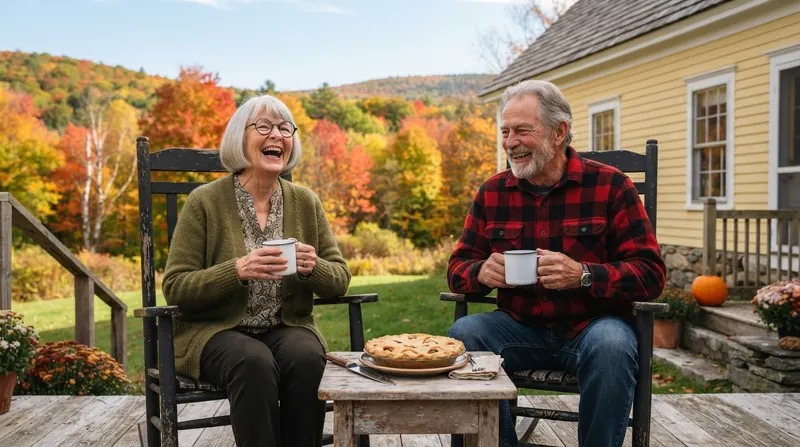
East Alder Air · The Porch Tapes, Episode 7
A Retired Mailman, a School Cook and Fourteen Grange Steps
Eldon
host
Nell, the radio wants to know why a school cook left a bottle on a mailman's windowsill without asking.
 Nell
guest
Because Gil told me you stopped on the landing, and you've never once in forty years admitted to stopping anywhere. I fed you lunch in 1987, Eldon, and I know when you're hiding something.
Eldon
host
You did not feed me lunch in 1987.
Nell
guest
I fed Becca lunch in 1987 and you ate her leftover tater tots in the truck, same thing. I keep that bottle in my pantry every winter, and I'm not going to tell the radio it does anything special; I like it in the morning before I walk, and I like that the label has nine things on it and I can pronounce eight.
Eldon
host
Which one can't you pronounce?
Nell
guest
Elecampane, which I say like a French dessert. The point is, Eldon, you read the whole label, called Marisol about the licorice, called Dana and did the alcohol arithmetic on a feed-store receipt; that's the part I want people to hear: read the label, ask your own people, then walk.
Eldon
host
And the stair count?
Nell
guest
The stair count is the best thing you've typed in eleven years, and it's honest: week two says "nothing" and week nine says you were back on the landing. People trust a man who prints his bad weeks.
I've listened to that tape four times, mostly for the tater tots. But Nell's last line is the one I'd want on my headstone: people trust a man who prints his bad weeks.
If You Want the Bottle From Nell's Pantry
I'm not going to pretend a link at the bottom of a newsletter is anything but a door to the seller's shop. Clear Breath Daily doesn't keep inventory; we keep counts.
But if you walk through that door, you'll know exactly what's on the other side: five herbs, raw honey and lemon, a stated alcohol content, a short label you can read with a magnifier, and a Vermont phone number that a person answers.
4.2 fl oz bottle · about 16 servings · read the seller's fine print before ordering
The Seller's Return Policy, Read Like a Postal Regulation
Now the part most columns skip, and the part I'd have read first at the post office counter: what happens if you don't like it.
I want to be very plain here, because this is where a lot of herb companies get slippery. This seller does not take returns for dislike, and I'm not going to dress that up as anything else.
Here is what their policy says, in their own words: "We cannot accept returns for any reason due to the safety and quality concerns with our ingestible products."
And further down: "We cannot offer refunds due to buyer's remorse or dislike of products." That's as clear as a canceled stamp.
I'll be honest, the first time I read "we cannot accept returns for any reason," I raised an eyebrow. Then I thought about what I'd want if I were the one making a food product that goes in somebody's mouth.
You don't want a half-used bottle coming back through the mail and going back on a shelf. Most honey and food sellers won't take an opened jar back either, and they're right not to.
But it does change how I'd buy it. If you're not sure you'll like the taste, start with the small bottle, $22.99, about sixteen spoonfuls.
That's enough to find out whether you're a Nell or a Ron.
And skip the subscription unless you already know you want it every month. The seller is honest enough to say "please do not subscribe for a single purchase," and I'd take them at their word.
The company is called Urban Moonshine. It started in 2008 in a Burlington kitchen and a booth at the farmers' market there, and its own page says it's female-founded, with a team of herbalists who formulate the line.
It publishes a phone number, (802) 428-4707, and a mailing address: 50 Lakeside Avenue, Box #118-H21, Burlington, Vermont. That's a box, not a storefront, and I'll say so, because a mailman knows the difference.

Short answers to the questions people ask at Lafleur's counter
How do you take it?
7.5 mL, which is one and a half teaspoons, up to four times a day, per the label. I take one measured spoonful after breakfast and before my walk.
What does it taste like?
Honey and lemon first, then earthy, slightly bitter roots, then the warmth of the alcohol. If you can't stand bitter flavors, you may not like it.
How much alcohol is in it?
The label says 35 to 40 percent, so one 7.5 mL serving works out to about 2.6 to 3.0 mL of pure alcohol, roughly a sixth of a U.S. standard drink. Not before driving, and not for anyone who avoids alcohol.
How long does a bottle last?
The 4.2 fl oz bottle is about 16 servings for $22.99; the 8.4 fl oz is about 33 for $39.99. At one a day, that's about two weeks or a month.
Can I return it if I don't like it?
No, the seller's policy says it does not accept returns on ingestible products or refund for dislike. Damaged or defective items are handled by email within 30 days of delivery.
Is it OK alongside what I already take?
Ask your own clinician or pharmacist, especially about the licorice root, which the federal fact sheet flags for people watching their cuff numbers, potassium, heart or kidneys. That's what I did.
Will it change my chest?
Nobody honest can promise that, and the seller's page carries the FDA statement that its claims haven't been evaluated. My stair count moved over twelve weeks of daily walking, a long scarf and a morning spoonful, and I can't tell you which one did what.
Who Might Want the Bottle, and Who Should Walk Past It
It might be for you if:
- Your winter mornings have a count of their own: a landing, a porch, a hill you used to take without thinking
- You want a small, warm habit by the door that gets your boots on, not something to swallow with water
- You like honey, lemon and earthy roots, and you don't mind a bitter edge
- You'd rather read a nine-item label you can look up at the library than a list you need a dictionary for
- You'll actually walk, and actually keep a count to show your clinician
It probably isn't for you if:
- You want a promise about your chest; nobody honest can give you one, and the seller's FDA line says so
- You avoid alcohol for any reason; there's 35-40% in the bottle
- You're pregnant, or buying for someone who is; the label says not during pregnancy
- You've been told to watch your cuff numbers, potassium, heart or kidneys and haven't asked about the licorice yet
- You want to be able to send it back if you don't like the taste; the seller doesn't take returns
That first line on the second list matters most. This is a spoonful of herbs in honey, not a plan; the plan is whatever you and your clinician write down together.
What a Spoonful Costs, Bottle by Bottle
Before I ordered my own, I sat down and did the same math I used to do on the price of stamps. Here's what I'd spent the winter before on things that were supposed to make the mornings easier.
I'm not saying the seventy dollars was wasted because the spoonful is cheaper per morning. I'm saying the seventy dollars was scattered across the whole winter, and the spoonful is aimed at one minute by the door before the walk.
If the taste suits you, the larger bottle brings it down to about $1.21 a spoonful, and the two-pack to about $1.09. If you don't know yet, the small bottle is the cheapest way to find out, and I'd start there.
If You're Standing at the Bottom of Your Own Steps
I can't tell you what to do. I can tell you what I'd do if I were reading this newsletter instead of typing it, back in November, standing at the bottom of the Grange steps with nine pounds of kraft paper under my arm.
First, before you buy anything at all: pick your own fourteen steps. A porch, a cellar stair, the hill to the mailbox.
Count your stops for two weeks and write them down with the date and the temperature.
Second: take that count to your clinician. Let them listen with the stethoscope, the way Dana listened to me, and ask what they want you to do.
Mine said walk every day, and come back if it changes.
Third: walk, every day, on flat ground if the hills are hard, with a scarf over your mouth on the bitter mornings. That's the column my clinician cared about most, and it costs nothing.
And fourth, if you'd like a small warm habit at the door and your clinician is behind you: read the label I've been describing for ten thousand words. Five herbs, raw honey and lemon, 35 to 40 percent alcohol, one and a half teaspoons, about $1.44 a spoonful in the small bottle.
Five herbs in raw honey and lemon · start with the small bottle if you're unsure about the taste
One more thing, and then I'll let you get to your own morning. The bottle is still on the windowsill above my sink, where Nell put it, and the sun still turns it the color of maple syrup.
This morning's line in the ledger reads: "Oct 24. Thirty-four degrees, smoke lifting.
River Road and back with the Blanchard dog. Grange steps: no stop.
Folding Thursday. Nell's bringing apple."
Grange steps: no stop. Four words, typed on a green Smith-Corona with a sticky "e," by a man who once pretended to tie his boot on a landing so nobody would see him breathing.
P.S. Nell's pie-plate tag is taped inside my kitchen cupboard now, next to Jeanette's measuring spoons, and if you have a Nell next door, thank her; if you are the Nell, leave the bottle on the windowsill anyway.
P.P.S. Remember the order Nell wrote in the ledger, spoon, scarf, walk, Dana: the spoon is the smallest of the four, and it's the only one that comes in a bottle.
The full ingredient guide, with a note on each of the plants on the label and on reading the advertising around this bottle, is linked at the foot of this page.